 Janine Bergmann
Advanced Open Water Diver on Gili T: from fun dive to the next certification
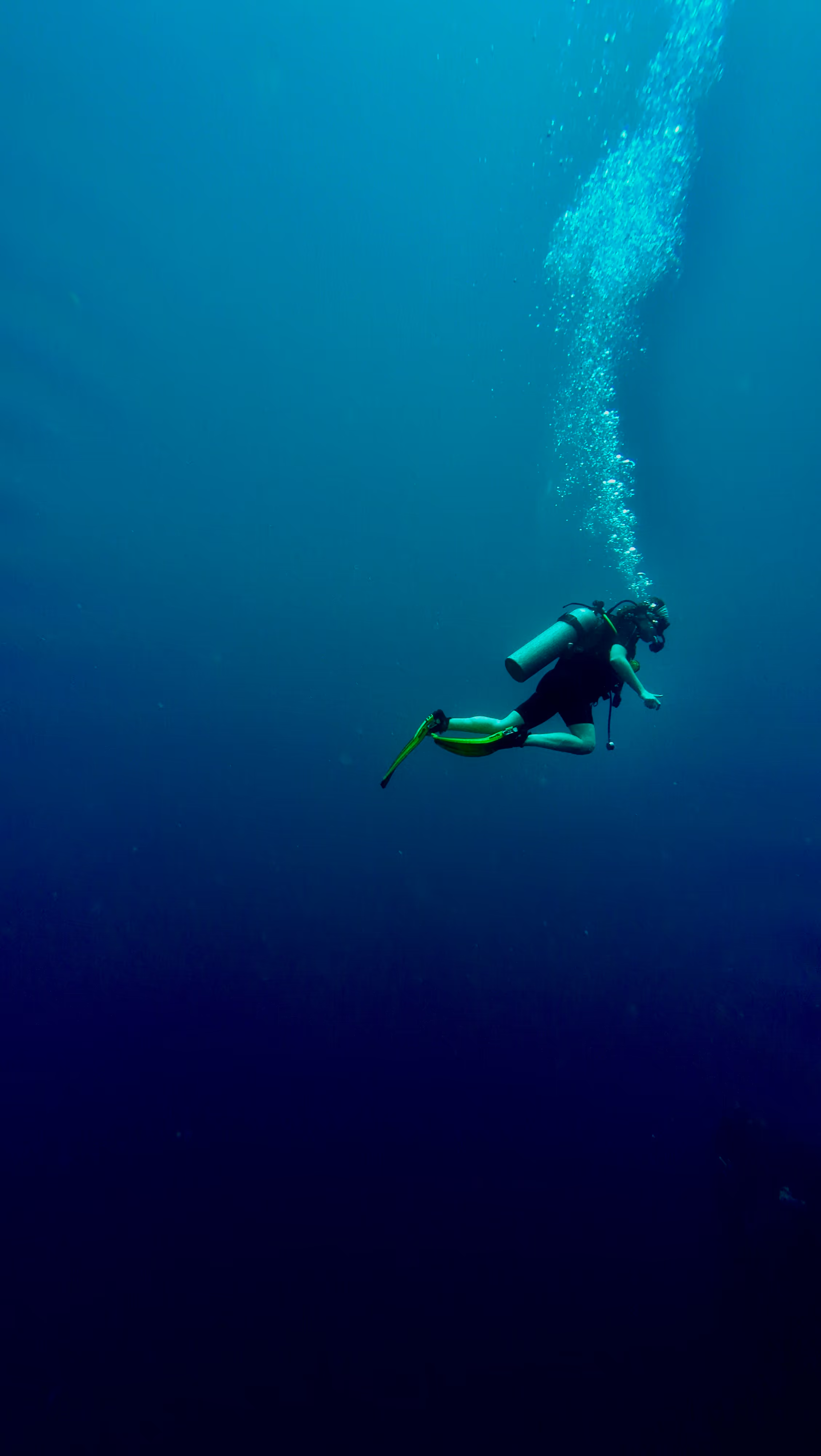
We actually just wanted a few relaxed fun dives on Gili Trawangan, and ended up with my Advanced Open Water Diver. From deep diving and navigation to sleeping reef sharks and bioluminescence on the night dive.
Contents+
After our dives off Nusa Penida, we actually only wanted to spend a few relaxed days on Gili Trawangan. A few easy dives and, in between, simply relaxing on the beach or cycling around the car-free island, in just 40 minutes you can circle the roughly eight-kilometre island, because there are neither cars nor scooters here, only bicycles and little horse-drawn carriages. Perfect conditions, then, for a few fun dives.
After the impressive mantas off Nusa Penida, I had no intention of getting my next certification so soon. But sometimes things just turn out differently.
Honestly, the first dive on Gili, which we do with Gili Divers, doesn't quite win me over yet. Maybe my expectations were simply a bit too high after the mantas. But on the second dive, any skepticism is gone: several sharks are sleeping in their caves beneath a coral reef, and a little later we spot a huge turtle, sharing the same cave with a shark. That's the moment the decision is made: since I'm already here, I might as well go straight for the Advanced Open Water Diver. I do choose a different dive school than for the first dive, though, and with Blue Marlin Dive on Gili Trawangan I made absolutely the right call.
A day and a half at full throttle
Since we've actually only booked two nights, I have just a day and a half for the course. Study the theory and complete five adventure dives. Sporty. But well, you don't treat yourself otherwise.
Luckily, William from England guides me through the entire course with the calm you wish for as a dive student. I got really lucky with my dive instructor.
On the schedule are a deep dive and navigation, which are mandatory. I get to pick the three other adventure dives: a wreck dive, buoyancy and a night dive.
Deeper than before
I'm looking forward to the deep dive the most. For the first time it goes noticeably deeper than on my previous dives, and for me it's also the first time to a wreck. Fascinating how the underwater world changes with every metre. At the same time, I also notice how important it is to keep an eye on your own air consumption and stay calm. That's exactly what the course is there for, after all.
The navigation dive also quickly shows me that a compass underwater is far more useful than I still thought after my Open Water Diver. Admittedly, by then I'd already pretty much forgotten the basics again. And yet, with this varied backdrop, I forget that I'm actually in the middle of earning my certification.
Total darkness
My personal highlight, though, turns out to be the night dive.
Philipp gets to join me for this one, and after sunset we head to the Bounty Wreck off Gili Meno, the remains of a sunken pier. There's nothing but the light of our flashlights. All around, only darkness. Honestly, I feel a little like Tom Cruise or James Bond on a secret mission, especially as this dive also had the strongest current so far and was anything but easy.
During the day you trust your eyes underwater without a second thought. At night, by contrast, you only ever see the small area the lamp happens to light up. That's exactly what makes the atmosphere so special, but I'll also admit that, in the first moment, descending into the dark gave me a bit of the creeps.
But the most impressive moment only comes when our instructor signals us to switch off the lamps.
From one second to the next it's pitch black. Absolute silence. All you can hear is the divers' steady breathing in and out. I carefully move my hands through the water and suddenly it lights up blue. Bioluminescence.
It feels like something out of Avatar: with every movement, a small glowing swarm forms around my hands. I knew in theory that tiny marine organisms can produce their own light through a chemical reaction. But experiencing it yourself, in the middle of the night, underwater, is something else entirely.
For that moment alone, the night dive would already have been worth it.
Done it
The next morning, the last adventure dive is already waiting, at the Glenn Nusa wreck that sank off Gili T in 2016. As we resurface, it's official: I'm now an Advanced Open Water Diver.
There isn't much time to celebrate, though. After all, we want to make use of the new possibilities right away. Since we like Gili Trawangan so much, we spontaneously book the ferry a day later and extend our stay a little.
My takeaway
The underwater world in Indonesia is once again far more impressive than in Egypt. I'm very glad I did my AOWD there; on top of that, with the wrecks and currents, for instance, you have the option to pick all the adventure dives yourself, which isn't possible everywhere. You also only travel about 15 minutes to every dive site, and each dive actually feels like a fun dive. I love learning something new about the underwater world and the different dive sites on every dive. The theory is also done faster than for the OWD, and there's no final exam at the end.
I'm already thinking about the next specialty, wreck diving, and I'm adding the Rescue Diver to my bucket list.
Gallery
Q & A
What's the difference between the Advanced Open Water Diver and the Open Water Diver?+
The Advanced course is no longer about the basics but about five adventure dives with different focuses: deep diving, wreck diving, buoyancy, underwater navigation and a night dive. Afterwards you're allowed to dive deeper (30 m) and you gain experience in situations you don't encounter yet on the Open Water course. Underwater navigation and deep diving are mandatory; you can pick the others yourself. For example, you could also specialise in fish identification or photography.
Read the full story: A day and a half at full throttleHow long does the Advanced Open Water Diver take?+
For me it was a day and a half: the theory and five adventure dives. That's sporty but doable if you fully commit. Still, I'd recommend spreading the dives over 3 days to enjoy it all a bit more. Personally, 2 dives a day are enough for me, and the 3rd dive on that one day was pretty exhausting for the body, too. Here as well, I'd recommend doing the theory in a relaxed way beforehand if you can, and not on the beach.
Read the full story: A day and a half at full throttleDo you see turtles and reef sharks on Gili Trawangan?+
Yes. During the day reef sharks sleep in their caves beneath the coral reefs, and you'll come across turtles pretty reliably while diving and snorkelling around the Gilis. Unfortunately there are also lots of triggerfish, so watch out.
What camera do you use for underwater photos?+
I use the DJI Osmo Action 4 and I'm really happy with it. It has better exposure underwater than some other action cams.
Which adventure dives are most worthwhile?+
For me it was definitely the wreck dive. Even though I saw the same wreck three times, I still found it impressive. But I have to say the drift diving off Nusa Penida was a lot of fun too.
Read the full story: Deeper than beforeHow much experience should there be between OWD and AOWD?+
It actually makes sense to do the AOWD straight afterwards. In my view you do not need any experience in between unless you feel unsure. I was lucky and often out on my own with Philipp, so the instructor could adapt to my personal level. Normally a group is paced by its weakest diver, and I quickly felt overqualified. On top of that, the AOWD is the standard for most adventure dives. So do not take too long a break: the skills you learn there are genuinely important, and the dives afterwards are far more fun because you no longer have restrictions, especially on depth.
Read the full story: My takeawayIs a night dive scary?+
Yes, somehow it is at first, you have to let yourself settle into it. But your eyes adjust to the darkness quickly. Honestly I only found it slightly scary up until the moment you are actually underwater, from then on the fear disappears fast. You should be considerably more careful than during the day though: always make sure you do not lose anyone and that you keep your bearings. We got to witness bioluminescence.
Read the full story: Total darknessWhich dive school on Gili Trawangan?+
I can only recommend Blue Marlin, for me it was the best dive school there.
Keep reading
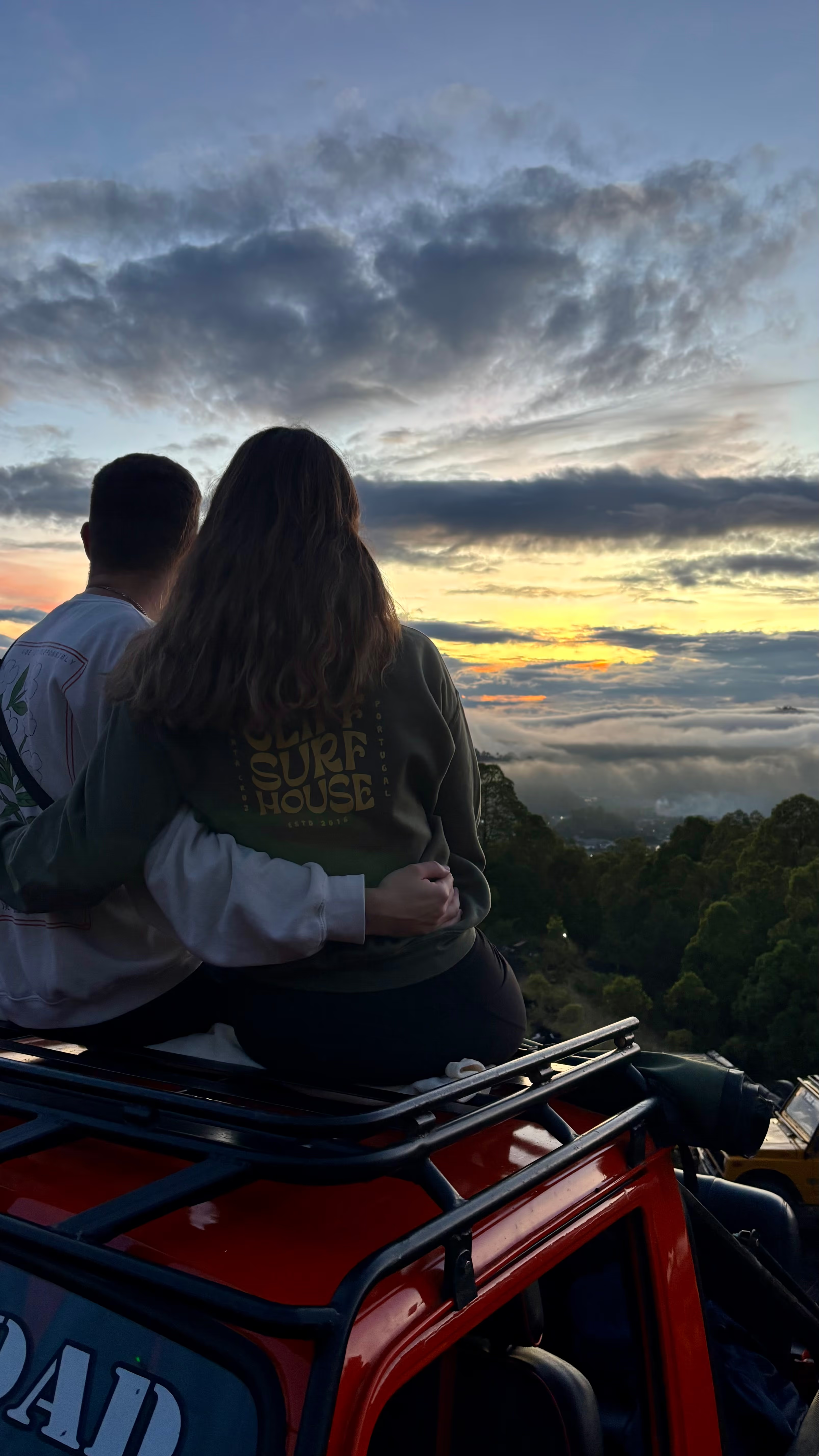
Diving in Bali: Between Manta Rays, Sharks, and Turtles
From the cliffs of Uluwatu to the rice terraces and temples of Ubud, from the manta rays off Nusa Penida to the dives on Gili Trawangan: my travel diary from two weeks in Indonesia.
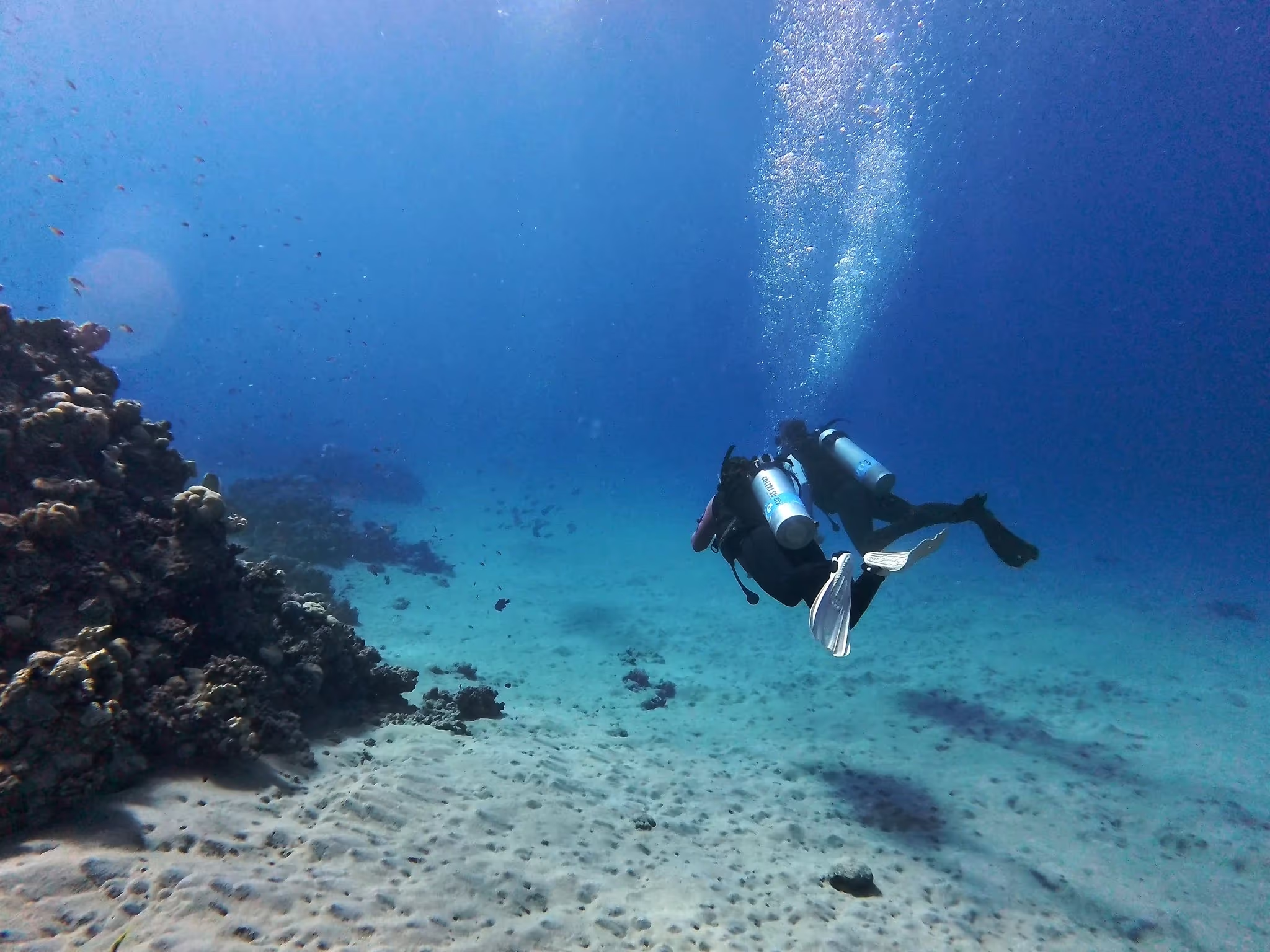
Open Water Diver: my dive certification in the Red Sea
How I earned my Open Water Diver in Makadi Bay: from the first nervous minute underwater and a sleeping giant turtle to a passed certification after almost an hour in the Red Sea.
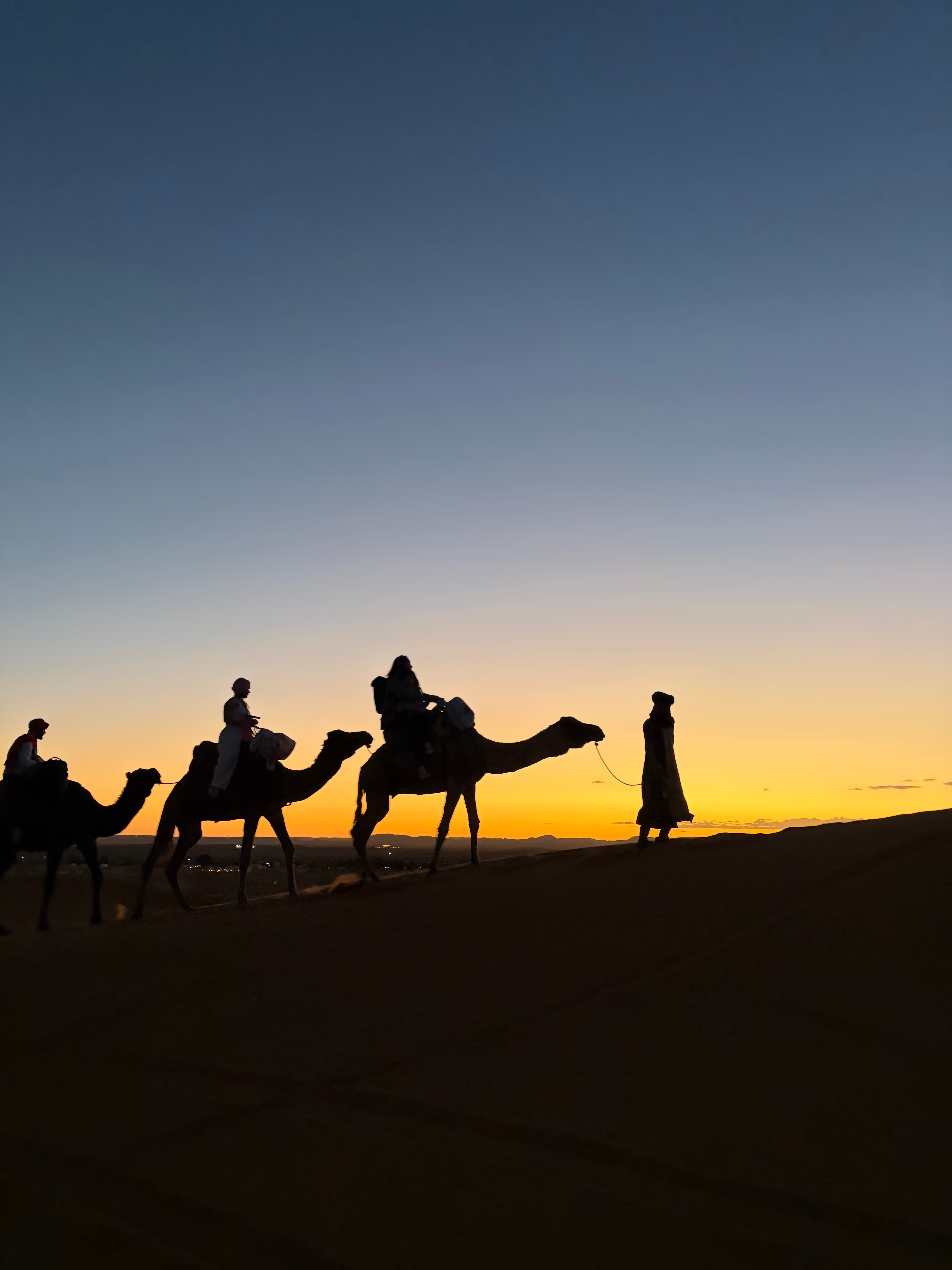
Between Dunes and Spice Markets: Six Days in Morocco
Six days, nearly ten hours in the car and one of the most beautiful sunsets of my life: from the dunes of the Merzouga desert and the souks of Marrakech to the Atlantic in Agadir.